Installing solar panels has become one of the most popular ways to improve the energy efficiency of homes, commercial buildings, industrial facilities, and public infrastructure.
However, before adding a photovoltaic system to a roof, there is one important question that is often overlooked:
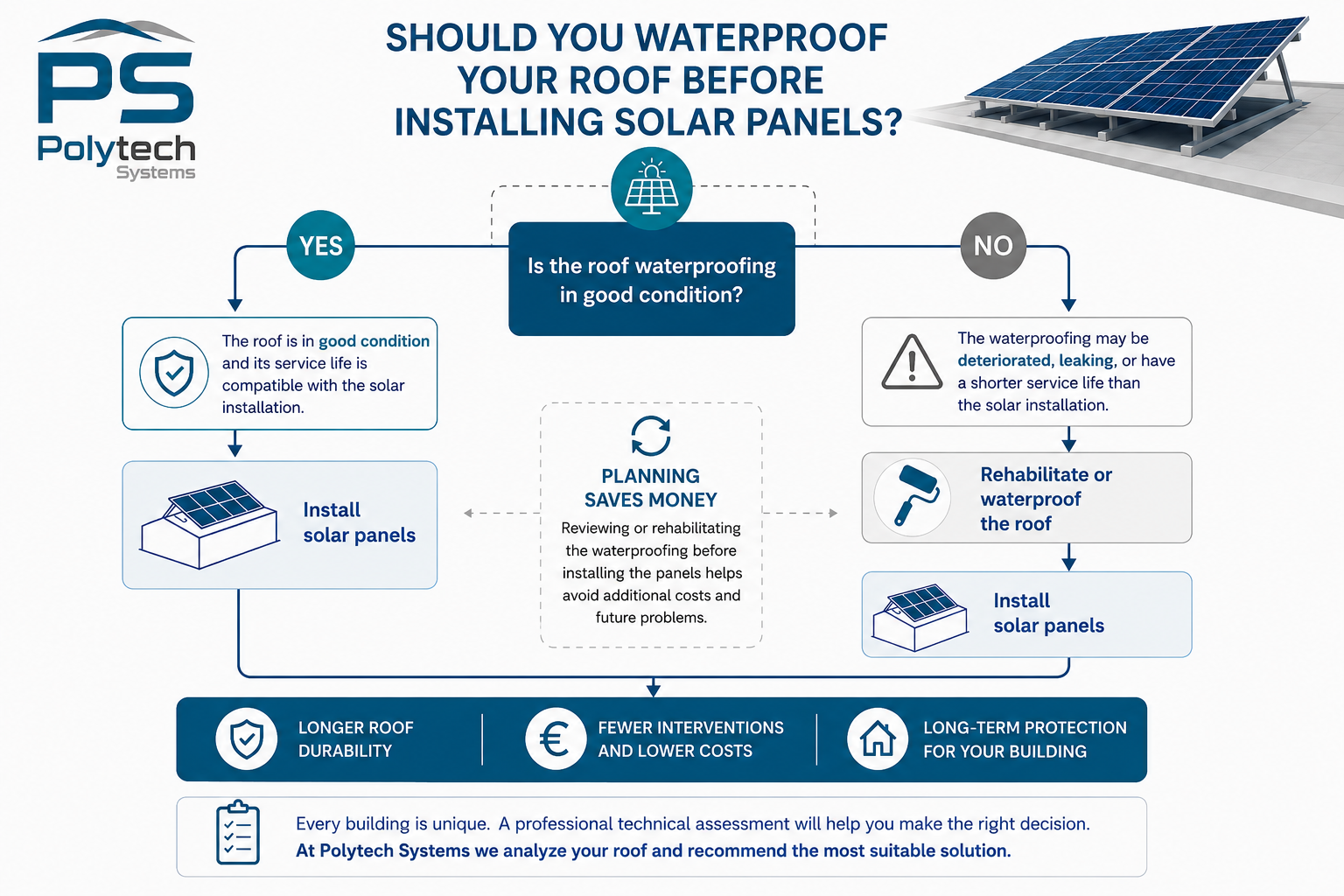
Is the existing waterproofing system in good enough condition to last as long as the solar installation?
Assessing the condition of the roof before installation can help avoid future repairs, unnecessary costs, and the need to partially dismantle the solar system to access the waterproofing.
The lifespan of solar panels and the roof may not match
A photovoltaic installation is designed to operate efficiently for decades with relatively little maintenance.
The roof waterproofing, however, may be in a very different condition. If the roof is already several years old or shows signs of wear, it may require rehabilitation long before the solar panels reach the end of their service life.
In these situations, installing the solar panels first can make future maintenance and repair work far more complex.
What happens if the waterproofing fails after the panels have been installed?
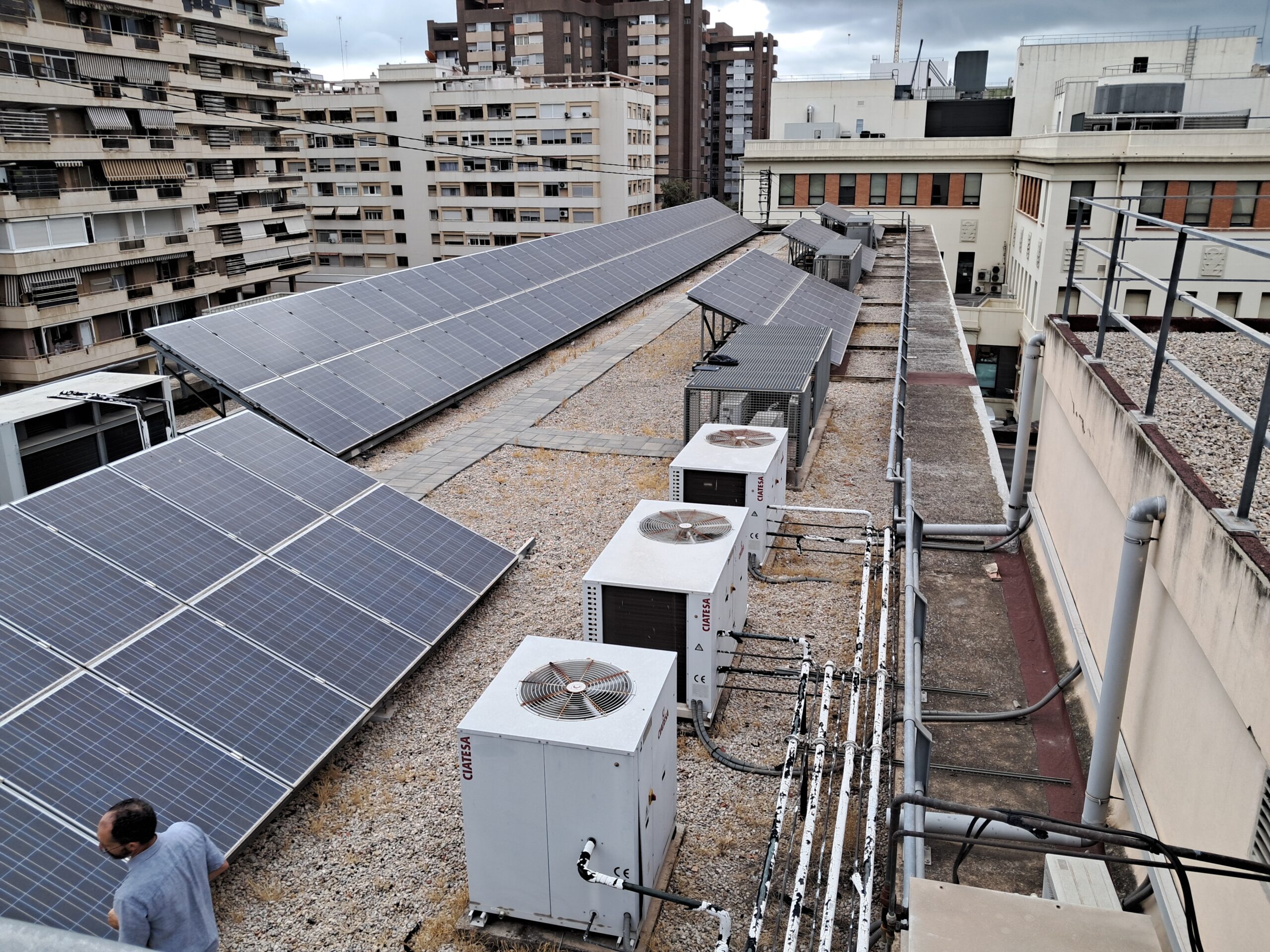
If a leak develops beneath a photovoltaic installation, accessing the affected area is no longer as straightforward.
Depending on the design of the solar system, part or all of the supporting structure may need to be removed before the waterproofing can be repaired.
Although this is not always the case, it can increase both the duration and the cost of the repair.
For this reason, many projects include a roof assessment before the solar installation begins.
Is waterproofing always necessary?
Not necessarily.
If the roof is relatively new, the waterproofing system is in good condition, and its expected service life is compatible with that of the solar installation, no additional work may be required.
However, if there are doubts about the condition of the waterproofing, a technical assessment can determine whether rehabilitating the roof beforehand is the most appropriate option.
Every building is different, and the decision should always be based on factors such as the condition of the roof, the intended use of the building, and the characteristics of the photovoltaic system.
A good opportunity to rehabilitate the roof
Installing solar panels usually requires full access to the roof and careful planning of the installation.
For this reason, many building owners, companies, and property managers choose to renew the waterproofing at the same time if the existing system is approaching the end of its service life.
Coordinating both works can help avoid future interventions while extending the lifespan of both the roof and the solar installation.
Proper planning helps prevent future problems
Every roof has its own characteristics.
The type of waterproofing system, the age of the building, the structural capacity of the roof, and the fixing method for the solar panels should all be evaluated before installation begins.
Careful planning helps ensure the roof remains watertight while minimizing future maintenance and repair work.
Technical Expertise and Experience
At Polytech Systems, we deliver waterproofing solutions for industrial, commercial, residential, and public buildings, adapting each project to the specific requirements of the structure.
When a roof is intended to support a photovoltaic installation, we assess the condition of the existing waterproofing system and recommend the most suitable solution to ensure long-term durability, watertightness, and compatibility with the new installation.
Planning to Install Solar Panels on Your Roof?
Before installing a photovoltaic system, a professional roof assessment can help determine the condition of the existing waterproofing and whether it is the right time to rehabilitate it.
Planning both works together can help avoid future interventions and maximize the lifespan of both the roof and the solar installation.