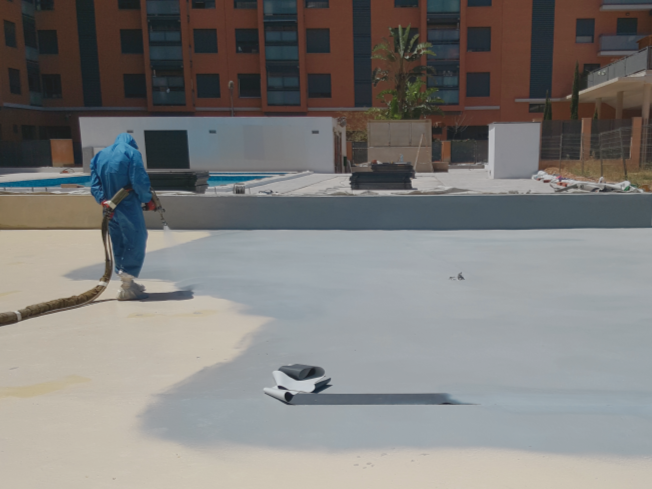
Roof waterproofing is an essential element to protect buildings from water ingress and ensure their long-term durability. Among the most commonly used systems are the bituminous membrane (also known as asphalt membrane) and spray-applied polyurea, a more recent technology.
Both systems offer good performance, but they present important differences that should be considered before choosing the most appropriate solution for each roof.
What Is an Bituminous Membrane?
A bituminous membrane is a prefabricated waterproofing system composed of modified bitumen reinforced with polyester or fiberglass reinforcements.
It is installed in rolls using torch-applied or self-adhesive systems, forming a waterproof layer over the roof surface. It is one of the most widely used waterproofing systems for flat roofs and can be installed in one or multiple layers depending on project requirements.
It is often referred to as asphalt membrane as well.
What Is Spray-Applied Polyurea?
Polyurea is a liquid waterproofing system applied by hot spray using specialized equipment.
Once applied, it forms a continuous membrane without joints or overlaps, offering high elasticity and excellent mechanical resistance. These characteristics make it particularly suitable for roofs with complex geometries or numerous critical details.
Main Differences Between Polyurea and Bituminous Membranes
Application Method
Bituminous membranes are installed in rolls that overlap with each other, creating joints that must be carefully executed.
Polyurea is applied in liquid form and creates a seamless membrane, eliminating overlap points
Elasticity and Adaptation to the Structure
Polyurea offers high elasticity, allowing it to adapt better to structural movements or small cracks in the roof structure.
Asphalt membranes perform well under normal conditions, although they may be less flexible when structural movements occur.
Adaptation to Complex Details
On roofs with complex transitions, installations, or construction details, polyurea offers superior adaptability as a seamless (continuous) system.
Bituminous membrane require greater precision in these areas to ensure complete watertightness.
Which System Is More Suitable?
The choice between polyurea and bituminous membrane depends on several factors, including:
- the type of roof
- the condition of the structure
- the intended use of the roof
- climatic exposure
- durability requirements
A prior technical assessment allows the most appropriate solution to be defined for each specific case.
Technical Expertise and Specialization
Selecting and applying a waterproofing system correctly requires technical knowledge and on-site experience.
With an extensive track record in roof rehabilitation and waterproofing, Polytech Systems analyzes each project individually to select the most suitable system, ensuring long-lasting and secure solutions.
Do You Need to Evaluate Your Roof Waterproofing System?
If you are considering roof rehabilitation or waterproofing works, a prior technical assessment can help determine the most appropriate system and avoid unnecessary interventions.