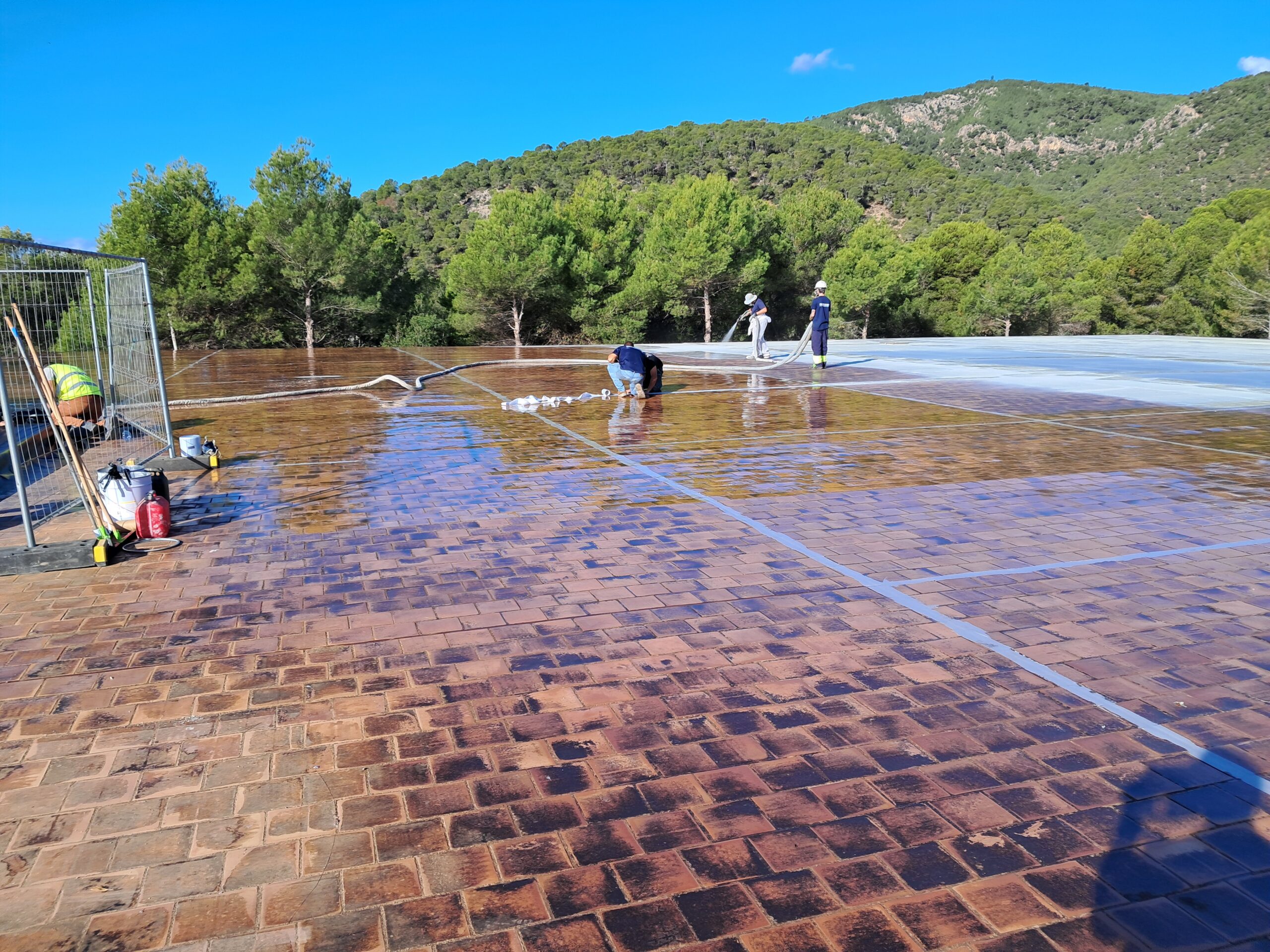
Flat roofs are a common solution for residential, industrial, commercial, and public buildings. However, there are still many misconceptions about how they work, how they should be maintained, and how waterproofing systems perform.
Some of these misconceptions can lead to poor decisions when constructing, rehabilitating, or maintaining a roof.
Here are 4 of the most common myths about flat roofs.
1️⃣ “A flat roof doesn’t need a slope”
Although they are called flat roofs, this does not mean they should be completely level.
Flat roofs are designed with slopes that direct water towards drainage systems such as roof drains and gutters. Proper water drainage is essential to prevent unnecessary water accumulation and help extend the service life of the waterproofing system.
A properly designed flat roof should therefore have the appropriate geometry and drainage systems to effectively manage rainwater.
2️⃣ “If water collects on the roof, the waterproofing has failed”
The occasional presence of standing water on a roof does not necessarily mean that the waterproofing system has failed.
Small areas of water accumulation may be related to the roof’s geometry, slope, drainage system, or weather conditions.
What matters is determining whether these accumulations are temporary and controlled, or whether they remain for extended periods and are accompanied by other signs of deterioration.
A properly designed roof should maintain watertightness even under prolonged exposure to moisture, but efficient water drainage remains essential for its long-term performance.
3️⃣ “Waterproofing lasts forever”
No waterproofing system is permanent.
Ultraviolet radiation, temperature fluctuations, moisture, structural movement, and environmental conditions progressively affect waterproofing materials.
The service life of a system depends on factors such as the type of system used, the quality of its application, the characteristics of the substrate, and the conditions to which the roof is exposed.
For this reason, regular maintenance and proper roof care are important to detect deterioration before it develops into a more significant problem.
4️⃣ “Solar panels and waterproofing are incompatible”
Solar panels and a properly waterproofed roof can coexist without problems.
The key is to plan the photovoltaic installation while taking the existing waterproofing system and the condition of the roof into account.
If a roof has an ageing waterproofing system, it may be advisable to rehabilitate it before installing solar panels. This can prevent future repairs from requiring work around an already-installed photovoltaic system.
On the other hand, if the roof is in good condition and its expected service life is compatible with the solar installation, a new waterproofing system may not be necessary.
A flat roof requires a solution adapted to each building
There is no single waterproofing system suitable for every flat roof.
The type of substrate, roof geometry, intended use, environmental conditions, existing installations, and the building’s future requirements are some of the factors that should be taken into consideration.
Solutions such as liquid-applied membranes, polyurea, waterproofing membranes, or cementitious systems may therefore be suitable in different situations, depending on the specific characteristics of each project.
Polytech Systems: Flat Roof Solutions
At Polytech Systems, we specialize in the waterproofing and rehabilitation of flat roofs for industrial, commercial, public, and other types of buildings.
We develop solutions adapted to each roof, using waterproofing and protection systems designed to improve watertightness, durability, and overall performance.
Choosing the right system and ensuring specialized installation are key factors in achieving a long-lasting waterproofing solution.