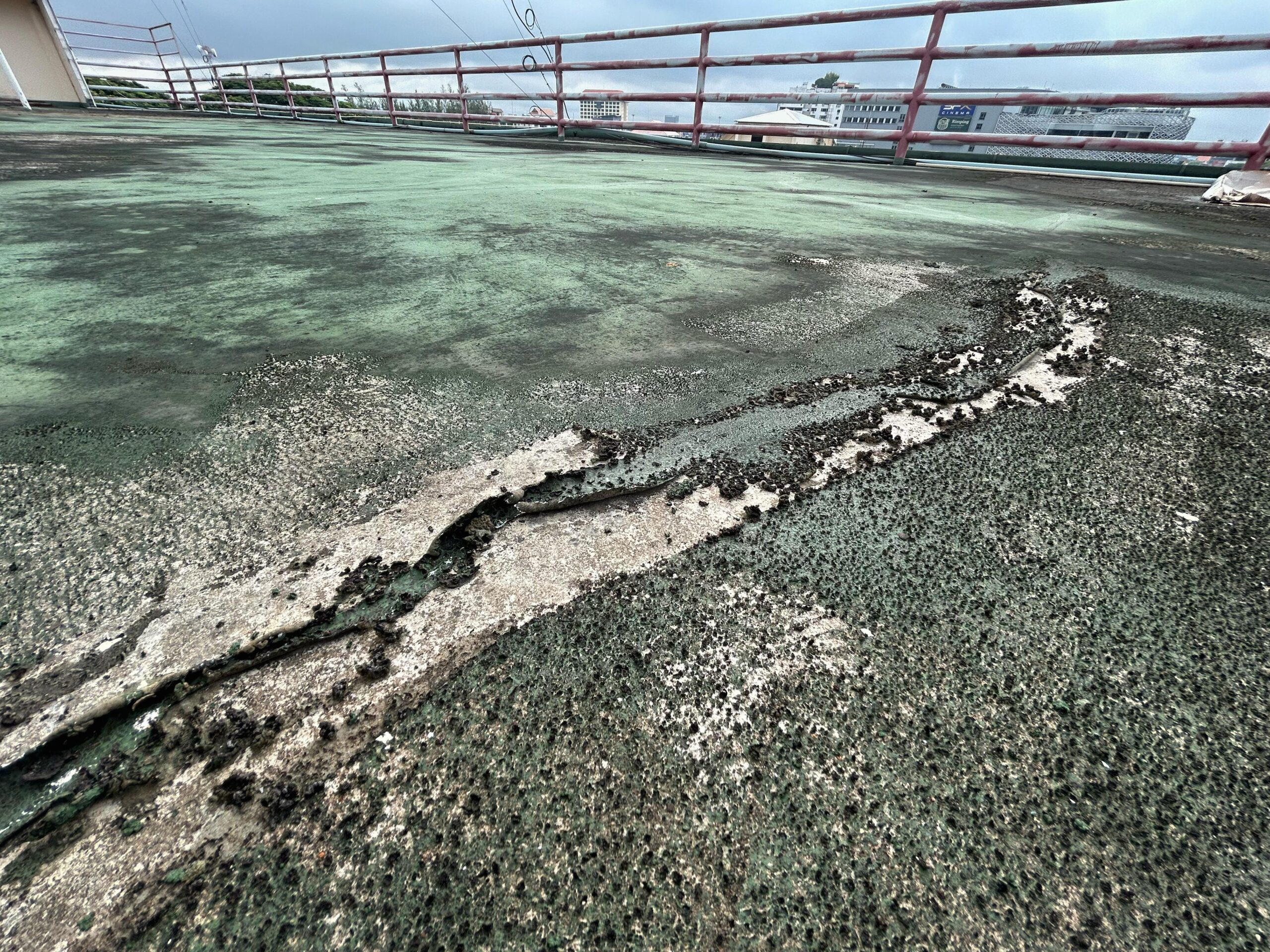
Defective waterproofing can lead to leaks, material deterioration, and even structural damage if not detected in time. In many cases, problems are not immediately visible and only become apparent once significant damage has already occurred.
Identifying the early signs of failure allows preventive action to be taken, avoiding more expensive interventions and extending the service life of the roof or waterproofed surface.
Most Common Signs of Defective Waterproofing
1️⃣ Damp Areas, Stains, or Mold
The appearance of stains on ceilings or walls is often the first warning sign. These may appear as dark areas, yellowish marks, or mold growth, especially after periods of rain.
In some cases, dampness does not appear directly below the entry point, making it difficult to locate the actual source of the leak.
2️⃣ Peeling or Blistering of the Surface
The appearance of bubbles, blisters, or raised areas on the surface indicates adhesion problems or trapped moisture beneath the waterproofing system.
This is often caused by poor substrate preparation or application on damp surfaces.
3️⃣ Cracks or Fissures in the Deck
Cracks in the roof surface or in the waterproofing system itself can allow water to penetrate directly into the structure.
These can be caused by structural movements, thermal changes, or a lack of elasticity in the applied system.
4️⃣ Water Ponding
If water remains accumulated on the roof for extended periods, there may be problems related to slope design or drainage.
Continuous ponding accelerates the aging of the waterproofing membrane and increases the risk of leaks.
5️⃣ Failures at Critical Points
Transitions with parapets, drains, expansion joints, or utility penetrations are critical areas where leaks commonly appear if they are not correctly executed.
Most Common Causes
Defective waterproofing is usually related to:
- poor surface preparation
- incorrect system selection
- deficient execution
- aging of materials
- later interventions without technical control
Identifying the actual cause is essential to applying an effective long-term solution.
How to Act Against Defective Waterproofing
When any of these signs are detected, it is important to avoid temporary or superficial repairs.
The most recommended approach includes:
✔ carrying out a complete technical inspection
✔ indentifying the real source of the leak
✔ evaluating the condition of the existing system
✔ defining the most appropriate solution
Acting only on the visible area usually leads to temporary repairs that do not solve the underlying problem.
Importance of a Professional Assessment
A correct diagnosis determines whether it is necessary to repair, reinforce, or replace the waterproofing system.
Each case requires a specific analysis based on the roof type, substrate condition, and usage.
Specialization and Technical Expertise
Detecting and repairing defective waterproofing requires technical knowledge, experience, and a proper understanding of building pathologies.
With an extensive track record in rehabilitation and waterproofing, Polytech Systems analyzes each case individually to offer long-lasting solutions tailored to every roof type. Proper execution and the choice of the right system are key to preventing future leaks and guaranteeing the structure’s lifespan.
Do You Need to Assess the Condition of Your Deck?
If you have noticed dampness, leaks, or signs of waterproofing failure, an early technical assessment can help prevent more serious damage.